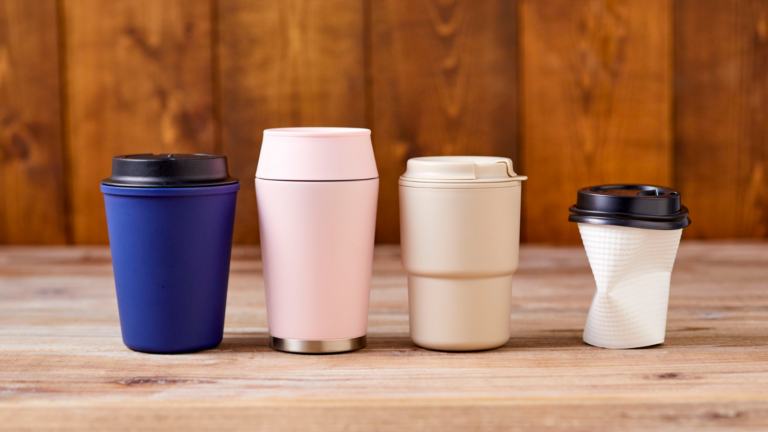


On December 2, 2025, the Single-Use Material Decelerator (SUM’D) hosted a webinar for users of the Understanding Packaging (UP) Scorecard and other interested stakeholders discussing the health and environmental impacts of different single-use versus reusable foodware and food packaging and the considerations that go into designing effective reuse systems. The presentations made it clear that there is no one-size fits all solution for reuse: while some materials may have negative human health implications, others have environmental and financial benefits that cannot be discounted.
Dagny Tucker of Perpetual described the significant environmental impacts of single-use packaging, including resource extraction, pollution, generation of microplastics, and greenhouse gas emissions, and highlighted society’s growing understanding of the human health implications. Based on the recently published Breaking the Plastic Wave report, she then explained that “reuse is the largest lever we have to reduce plastic waste and pollution.” However, Dagny emphasized that there are currently sustainability and practical trade-offs to different materials when designing a reuse system in terms of cost, functionality, and environmental impacts. Today’s lower market price of plastics fails to consider their true external costs, and as a result, plastic remains more widely used than other more inert materials such as stainless steel and glass.
Birgit Geueke of the Food Packaging Forum discussed the human health considerations when choosing materials for reusable foodware and food packaging applications. She described how research at the Food Packaging Forum has demonstrated that chemicals known to be hazardous to human health, such as per- and polyfluoroalkyl substances (PFAS), phthalates, and bisphenol A (BPA), can all migrate from food packaging into foodstuffs. She explained that, while regulations exist in the US and EU to prevent harm to human health, they remain vague and only cover the first few lifecycles of a product, ignoring the potential risks that come with degradation over time. To help avoid these health effects, Birgit recommends that designers consider chemical migration through the entire life cycle of their reusable product, choose more inert, high-quality materials, and anticipate any external contamination sources.
Anastasia Kiku of Reusables.com shared her company’s mission to mitigate the environmental effects of single-use packaging by providing technology and solutions for reuse. She described how they build turnkey systems for clients that enable high-performance reuse that allows for simple participation without sign-ups, no deposits, smart return bins, integration with existing ID cards and memberships, a variety of container options, high return rates, and data insights. Anastasia described the importance of ease-of-use because “if there is no adoption, there is going to be no impact.” In her case studies, she explained the different considerations required when selecting materials; while stainless steel might be right for a client with low volumes and seeking a high-end experience, polypropylene is a lower cost option for clients serving thousands of customers.
Sophie Trentesaux of ETERNITY Systems described her company’s experience with washing, transporting, and storing over 750 million packages each year. She explained the importance of considering the washing process when designing reuse systems, including understanding which steps can be automated. Sophie walked through two examples of the washing process for fruit and vegetable crates and stainless-steel trays. In conclusion, she outlined design considerations that should be made to simplify the washing process, including the shape and surface of the container, its durability, the label choice, and the pre-wash steps planned.
Thank you to all our speakers for participating in this insightful event and to the audience members who attended and asked questions. If you want to compare and model different reuse systems for yourself, check out the UP Scorecard. You can also visit the methodology page to learn more about the metrics included in the UP Scorecard and the help guide to learn how you can make the most of this tool.
Webinar Speakers

Dr. Dagny Tucker
Co-Founder & Co-Executive Director
Perpetual
Dr. Tucker is a designer, doer and speaker who actualizes sustainability through systems thinking and design. A pioneer in reusable packaging system design and implementation, she shares her technical and operational knowledge to support initiatives globally to scale reuse. She is the co-founder at Perpetual, founded Vessel, taught at Parsons The New School for Design, was formerly the Managing Director of Strategic Global Affairs for New Hope Natural Media and is co-founder of Thread Count Creative. She is a Tishman Scholarship recipient for “outstanding achievement in sustainability,” and holds a Ph.D. in International Peace, Conflict and Development from Universitat Jaume I in Spain.

Dr. Birgit Geueke
Senior Scientific Manager
Food Packaging Forum
Dr. Birgit Geueke is the Senior Scientific Manager at the Food Packaging Forum and is deeply involved in investigating the chemical safety of packaging materials, including chemical migration and recycling. She leads scientific studies and develops the Food Packaging Forum’s scientific databases.

Anastasia Kiku
Co-Founder
Reusables.com
Anastasia is a driven young female founder committed to creating a world where no resources are wasted. As Co-Founder at Reusables.com, Anastasia is on the front lines of the fight against single-use packaging. Reusables is shaping the vision for zero-waste food retail by creating a circular platform for packaging and helping foodservice to easily transition from single-use to reuse while achieving cost savings. Anastasia has been recognized as Forbes 30 Under 30, BC Business 30 Under 30, and Youth Entrepreneur of the Year 2023 for her work with Reusables. As an immigrant, Anastasia brings a global perspective and is not afraid of stepping outside her comfort zone. Her background as a professional alpine ski racer has taught her discipline and the self-motivation required to have success as an entrepreneur.

Sophie Trentesaux
Business Development Manager
ETERNITY Systems
After 4 years working in the food service sector in China, Sophie became passionate about the subject of reusable packaging in 2021. After supporting several restaurant chains in their transition to reuse with the Pyxo start-up in France, she joined the ETERNITY Systems group in 2023 as Business Development Manager. The group has specialized in washing, repairing, storing and transporting reusable packaging for over 31 years. The company currently operates 18 industrial sites across Europe, the U.S., and Canada and washes around 750 million packaging a year.