
On August 15th, Single-Use Material Decelerator (SUM’D) project partners met in Atlanta at the SPLC Summit. This was an occasion to showcase the Understanding Packaging Scorecard and interact with over 300 procurement and sustainability professionals across various sectors, engage interested stakeholders in a fruitful brainstorming session, and strengthen the engagement of the SUM’D team through side events.
The SPLC Summit featured a dedicated panel discussion entitled “Beyond carbon tunnel vision: Navigating sustainable procurement of foodware and food packaging”, chaired by Johanna Anderson (SPLC). The session was kicked off by Etienne Cabane (FPF) presenting how the UP Scorecard can empower procurement professionals in the food service space and help businesses make more informed, holistic procurement decisions in sustainable foodware and food packaging. The discussion continued with input from Judy Panayos (Sodexo), Marissa Golison (Compass Group), and Hamzah Abu-Ragheb (Aramark), representing three of the world’s major food service companies. They shared insights on how progressive companies are assessing their foodware and packaging options, how the UP Scorecard can help companies during internal transitions to better foodware and food packaging, and how the tool has been used in practice to help address previously overlooked aspects and support internal decision-making.
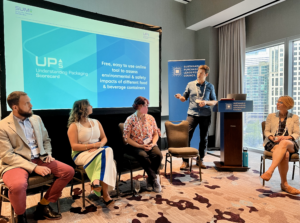
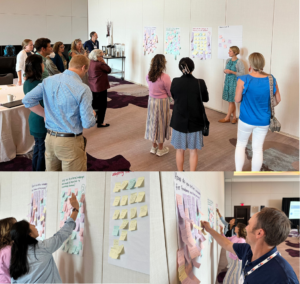
The SPLC Summit was an occasion for members of the SUM’D to meet for the first time in person (after many years of virtual collaboration) as well as to welcome a diverse and engaged public audience to an open house event. Participants were invited to reflect and brainstorm with a focus on the following questions:
- How do you define sustainability for foodware and food packaging?
- What are the internal challenges/needs to transition to sustainable foodware?
- What are the challenges in adopting the UP Scorecard?
SUM’D steering committee members Cassie Huang (Environmental Defense Fund), Kyle Meisterling (Scope 3 Consulting), and Dianna Cohen (Plastic Pollution Coalition) joined and led break-out group discussions. The open house was a great success with lively discussions leading to new ideas for future tool improvements and collaborations. Thanks to everyone who took the time to join us!
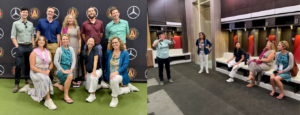
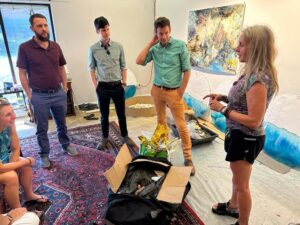
We ended the day with some field trip fun, taking the SUM’D members to the Mercedes-Benz Stadium for an eye-opening sustainability tour. Our trip wrapped up with an inspiring artistic journey to visit Pamela Longobardi’s art studio to learn about the Drifters Project and how littered plastic objects communicate with us about the ocean’s declining health.
Overall, the first SUM’D group gathering was a great success, and we are already thinking about the next event for 2024!